How to End a Cold Email: CTAs, Sign-Offs and P.S. Lines That Get Replies
The last three lines of a cold email decide whether anyone replies. Here are the closing CTAs, sign-offs and signatures that work, with examples.
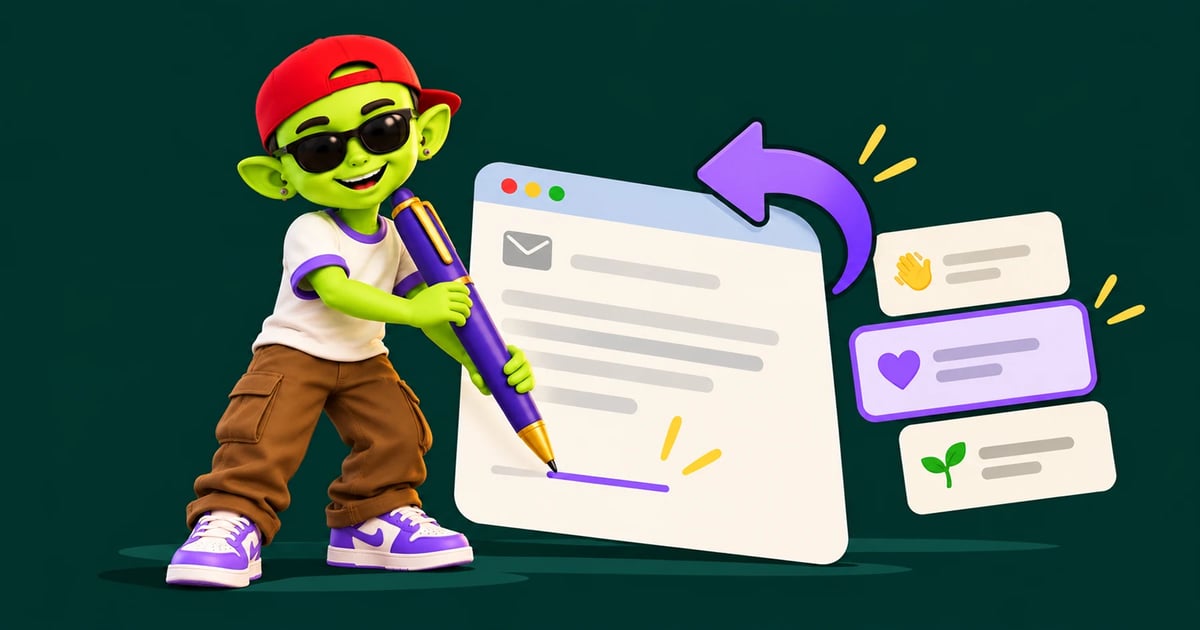

Knowing how to end a cold email is what turns a read into a reply. The ending has three parts: a call to action, a sign-off and a signature. The best endings ask for one small, clear thing and then get out of the way. Here's how to write each part, with examples you can adapt.
Part 1: the call to action
The CTA is the most important line in the email. It's the thing you want the reader to do. In cold email, smaller asks get more replies. You're asking a stranger for attention, not for a contract.
CTA type | Example | Ask size |
|---|---|---|
Interest check | "Worth a look for {company}?" | Very small |
Permission | "Mind if I send over a 2-minute video?" | Small |
Referral | "Are you the right person for this, or is someone else?" | Small |
Specific time | "Free for 15 minutes on Tuesday or Wednesday?" | Medium |
Calendar link | "Grab a time here: [link]" | Large |
Interest-check and permission CTAs usually work best in a first email. Specific-time CTAs fit once there's some warmth, such as a follow-up after a reply. Calendar links in a first touch feel presumptuous. They also add a link, which can affect deliverability.
Rules for a strong CTA
Ask one thing. "Can we talk, and also who handles X, and would a demo help?" gets no answer.
Make it a question. Questions invite a reply. Statements like "Let me know your thoughts" don't.
Make "yes" easy. A reader should be able to reply in one or two words.
Keep it to one line. Put it last, just before the sign-off.
Part 2: the sign-off
Keep the sign-off short and normal. Its job is to sound like a person, not to impress. These are all safe:
Best,
Thanks,
Cheers, (fine for casual industries)
Talk soon, (only after some back-and-forth)
Avoid overly formal or needy endings. "Respectfully yours" feels stiff. "Thanks in advance" assumes a yes. "Looking forward to hearing from you" is not wrong, but it adds pressure and takes space from your CTA.
Part 3: the signature
A cold email signature should prove you're real. It shouldn't be a billboard.
Include: full name, title, company name.
Optional: one link to your website or LinkedIn.
Skip: logos, banners, social icons and quotes. Images and many links can hurt inbox placement.
Plain text signatures also load fast on mobile, where many prospects read email. Our SpamAssassin score guide explains how image-heavy and link-heavy emails pick up spam points.
Optional: the P.S. line
Readers' eyes often jump to a P.S. It's a good place for one extra hook. Use it for:
A relevant result: "P.S. {similar_customer} cut {metric} by 30% in two months."
A personal note: "P.S. Congrats on the Series B."
A soft exit: "P.S. If this isn't relevant, just say so and I won't follow up."
Use a P.S. in some emails, not all. On every step of a sequence it becomes a pattern.
Don't forget the opt-out
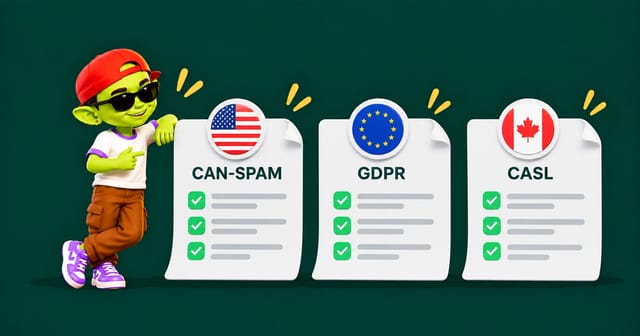
Commercial email to US recipients must give people a way to opt out under CAN-SPAM. The FTC guide also requires a valid postal address and says opt-outs must be honored within 10 business days. GDPR and other laws have their own rules. A simple line works in plain text: "Not the right fit? Let me know and I won't email again." See our cold email compliance guide for the details by region.
Full example
…We helped {similar_customer} cut onboarding time from three weeks to five days.
Worth a quick look for {company}?
Best,
Sarah Lee
Head of Partnerships, AcmeP.S. If this isn't relevant, just let me know and I'll stop here.
That ending is four short lines. It asks one question, signs off like a human, proves who's writing and gives an easy exit. For the opening and middle of the email, use our cold email templates.
Change the ending at each step
Using the same closing line in every email of a sequence makes it feel automated. Shift the ask as the sequence goes on:
Closing CTA | Why | |
|---|---|---|
First email | "Worth a look for {company}?" | Low-pressure interest check |
Follow-up 1 | "Should I send a short example?" | Offers value, still small |
Follow-up 2 | "Are you the right person, or is someone else?" | Opens a referral path |
Final email | "Should I close this out?" | Gives a clear, easy exit |
Keep the sign-off and signature the same throughout. Consistency there looks human. Variety in the ask keeps the thread fresh.
Bottom line
End every cold email with one small question, a short sign-off and a plain signature. Add a P.S. only when it earns its place. Then make sure the email reaches the inbox. AlienMail sends from warmed, rotated inboxes and groups replies by intent in one unified inbox, so the replies your CTA earns don't get lost.
Related guides: cold email templates, cold email subject lines, what is a cold email and is cold email legal.
Frequently asked questions
What is the best way to end a cold email?
End with a single low-effort question, like "Worth a look for {company}?", followed by a short sign-off such as "Best," and a plain-text signature.
Should I say "Looking forward to hearing from you" in a cold email?
It's polite but adds pressure and doesn't invite a specific reply. A clear question works better.
Should I put a calendar link in a cold email?
Not in the first email. Ask about interest first, then share the link once they reply.
Do I need an unsubscribe link in cold email?
You need a clear way to opt out. In plain-text cold email, a line like "Reply 'no thanks' and I won't email again" is common. Check the rules for each region you send to.
More from the blog
Your next campaign is six minutes away
Connect your business and let Alien AI handle the writing, structuring, and optimizing.
Generate my Business DNA — free