15 Cold Email Success Stories From Big Companies (2026)
Fifteen companies now worth millions or billions started with a cold email. Here is who they emailed, what they said, and what happened, with every number from the source.

These cold email success stories come from 15 companies that are now worth millions or billions of dollars. Each one started with someone writing to a stranger. No ads budget, no audience, no waiting for Google: cold email is the one channel that lets a new company reach exactly the people it wants, from day one, and scale that up by adding mailboxes, in a way no other marketing channel can. Here is who they emailed, what they said, and what happened. Every number comes from the founder's own words or a news report, linked at the end of each story.
Disclosure: we make Alienmail, a cold email tool. None of these companies are our customers. We read every source on 23 November 2026.
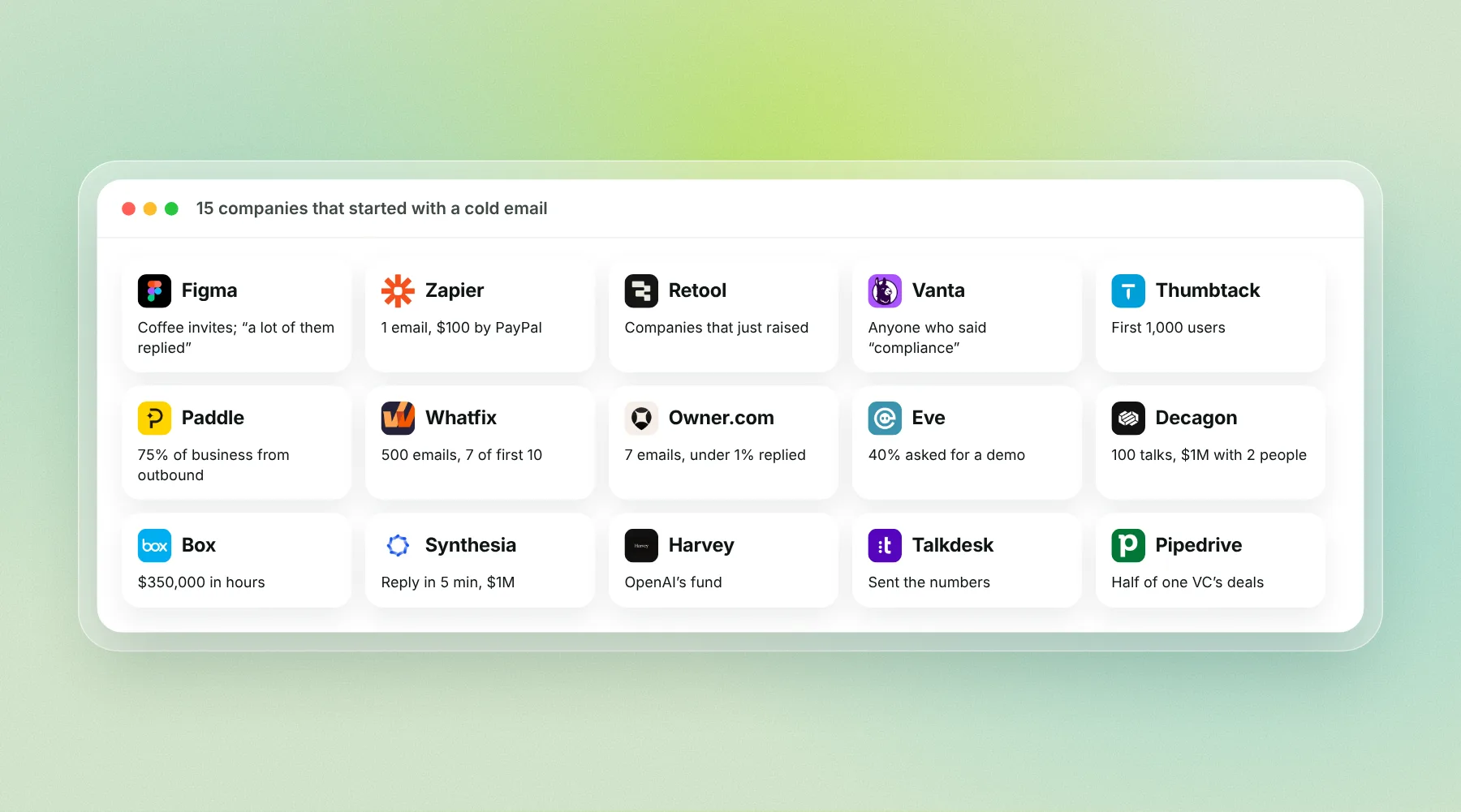
The short answer: Cold email found the first users for Figma and Thumbtack, the first paying customer for Zapier, the first customers for Retool, Vanta, Whatfix and Owner.com, and the first investors for Box, Synthesia, Harvey, Talkdesk and Pipedrive. The emails were short, sent to a carefully chosen person, and followed up. Reply rates were often low: under 1% for Owner.com, 1 or 2 replies from 500 emails at Whatfix. It still worked, because one yes was enough.
Part 1: first users and customers
1. Figma: coffee invites to designers he admired
Who: Dylan Field, who started Figma at 19 in 2012. Figma went public in 2025.
What he did: He emailed designers whose work he respected, and old coworkers from LinkedIn, Flipboard and O'Reilly, and asked them for coffee. His own words: "It's kind of wild that people reply to cold emails, but they do."
What happened: "A lot of them replied." Those meetings gave Figma its first users and pointed Field to more designers. He says the first users came "largely from cold-emailing and people in-network".
The lesson: Ask for something small. A coffee is easier to say yes to than a demo. Source: Fortune via Yahoo Finance, 11 August 2025
2. Zapier: one line, no pitch, $100 by PayPal
Who: Wade Foster, co-founder of Zapier, in late 2011. Zapier was later valued at $5 billion.
What he did: He searched "Highrise PayPal" and found an eight-month-old forum question from a founder, Andrew Warner, asking how to connect the two apps. Wade emailed him one question: "Have you found a solution for this yet?" No pitch.
What happened: Andrew replied three days later. He needed a different connection, Wufoo to AWeber. Zapier built it in a few days and asked for $100 to join the beta. Andrew paid straight into Wade's personal PayPal, because Zapier had no bank account yet. He was the first paying customer. Date of his tweet confirming it: 2 December 2011.
The lesson: Email the person who has already said they have the problem. Source: Zapier blog, 25 June 2012
3. Retool: emailing companies that had just raised money

Who: David Hsu, founder of Retool, now valued at $3.2 billion.
What he did: He bought a Crunchbase account, shared with five other startups to save money, and filtered companies by when they last raised money and what they do. He skipped SaaS companies ("they actually don't build that many internal tools") and picked delivery, fintech and other operations-heavy startups. Then: "we emailed the CTO and VP of operations at these companies."
What happened: That outreach brought in DoorDash, Rappi and Brex as customers.
The lesson: Timing is a filter. A company that just raised has budget and is about to hire. Source: Lenny's Newsletter, 5 September 2023
4. Vanta: emailing anyone who had said the word "compliance"
Who: Christina Cacioppo, founder of Vanta, valued at $2.45 billion in July 2024.
What she did: In 2018 she emailed the founders of older YC companies, the ones big enough to need a SOC 2 report. Then she went further: "I went through Bookface, the YC internal forum, and emailed anyone who'd ever said the word 'compliance'" in the past ten years.
What happened: Those emails brought Vanta its first 10 customers.
The lesson: The best list is people who have already written down your problem. Source: Lenny's Newsletter, 5 September 2023
5. Thumbtack: the first 1,000 users came from emails to local pros

Who: Sander Daniels, co-founder of Thumbtack, valued at $3.2 billion in 2021.
What they did: "We found email addresses of local service professionals and messaged them letting them know we existed." The offer was simple: register, and we will send you job leads.
What happened: "We used email marketing to get our first 1,000 users."
The lesson: Lead with what the reader gets. For a plumber, that is jobs. Source: Lenny's Newsletter, 26 July 2022
6. Paddle: one real problem in every email
Who: Christian Owens, co-founder of Paddle, which handles payments for software companies. At the time of the interview Paddle was past $10 million a year in revenue.
What they did: "We only ever did cold email outreach." Every email was written by hand and named one specific thing the company was getting wrong, such as: "if you visit your website from France, none of your prices are in euros", with the fix.
What happened: "We're probably 75% from outbound now." Inbound only started to matter about 18 months before the interview.
The lesson: Point at a problem the reader can check in ten seconds. Source: The SaaS Podcast, episode 199
7. Whatfix: 500 emails, a handful of replies, a customer before the product existed

Who: Khadim Batti, co-founder of Whatfix, in India. The episode page puts Whatfix at a $600 million valuation with $140 million raised.
What he did: 500 personal cold emails in the first month, 20 to 25 a day, mostly to small businesses and SaaS companies.
What happened: "We used to get one or two responses in first three months." Four to five companies committed. The first customer, a hospital software company, paid about $1,000 a year up front before the product was finished. Seven or eight of the first ten customers came from outbound.
The lesson: Low reply rates are normal at the start. Count commitments, not replies. Source: The SaaS Podcast, episode 310
8. Owner.com: seven emails, then a text

Who: Adam Guild, founder of Owner.com, online ordering for restaurants, now valued at $1 billion after a $120 million Series C.
What he did: He sent "hundreds, if not thousands, of cold emails" to small businesses in Los Angeles. Under 1% replied. He emailed Morten Kaag, owner of Tortilla Republic in West Hollywood, seven times, then sent a cold text.
What happened: The text got the meeting. Kaag agreed to a trial at $2,000 a month if Owner lifted sales within 90 days. Sales rose by more than $10,000 a month, and Kaag signed up his second restaurant too: Owner's first two paying customers.
The lesson: Most people quit after one email. Seven, plus a different channel, got the first customer. Source: First Round Review, 12 August 2025
9. Eve: from 1% to 40% of cold outreach asking for a demo
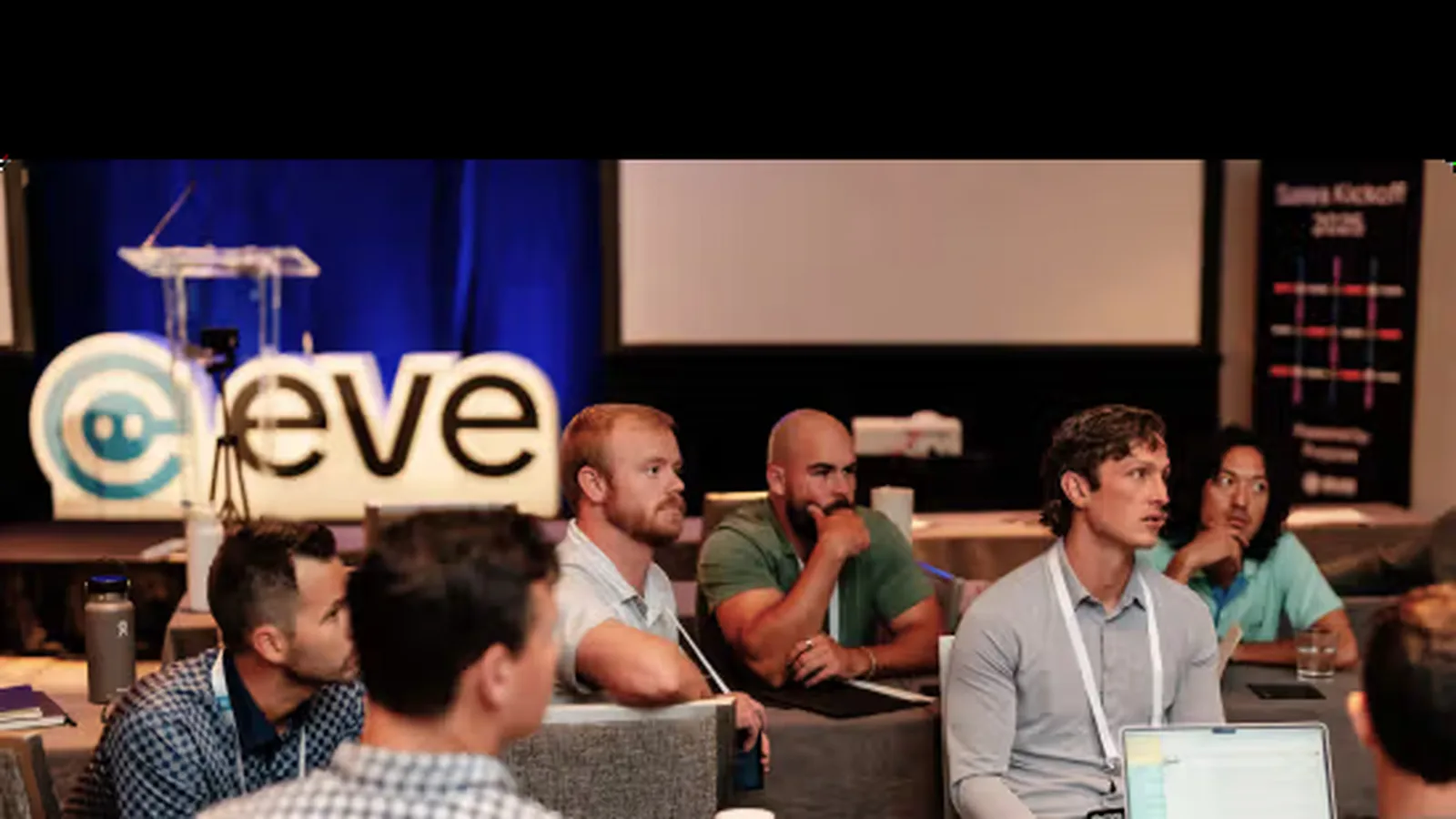
Who: Jay Madheswaran, co-founder of Eve, AI for plaintiff lawyers, valued at $1 billion in September 2025.
What happened: With his earlier product, about 1% of cold outreach turned into a demo request. After the team rebuilt the product for one kind of customer, "forty percent conversion rates from cold outreach into demo requests." Eve hit $1 million in yearly revenue in its first quarter.
The lesson: The same emails get 40 times the response when the product fits the reader. If nobody replies, the problem may be the offer, not the email. Source: PMF Show, 9 February 2026
10. Decagon: 100 conversations before the first sale

Who: Ashwin Sreenivas, co-founder of Decagon, AI agents for customer support, described as a $1.5 billion company with $230 million raised.
What they did: "A lot of time cold emailing, cold LinkedIning folks." They talked to more than 100 leaders of operations, support and sales teams before selling, alongside a few warm introductions from investors and a friend of the co-founder.
What happened: The two founders, with no employees, reached about $1 million in yearly revenue in roughly six months. Their first hire joined at about $950,000.
The lesson: Cold email is also research. The 100 conversations shaped what they sold. Source: PMF Show, 12 January 2026
Part 2: investors who replied
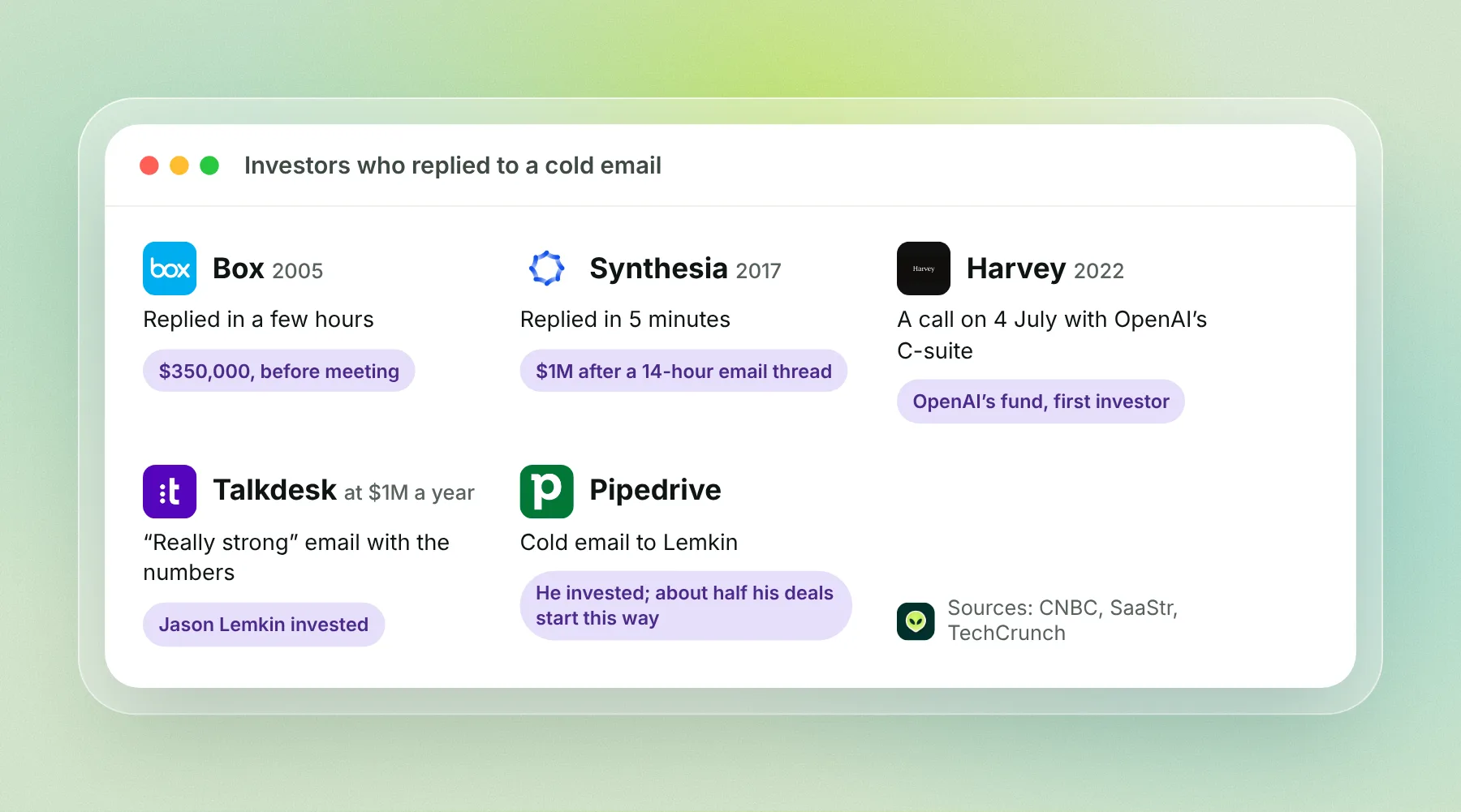
11. Box: a 20-year-old, Mark Cuban, $350,000
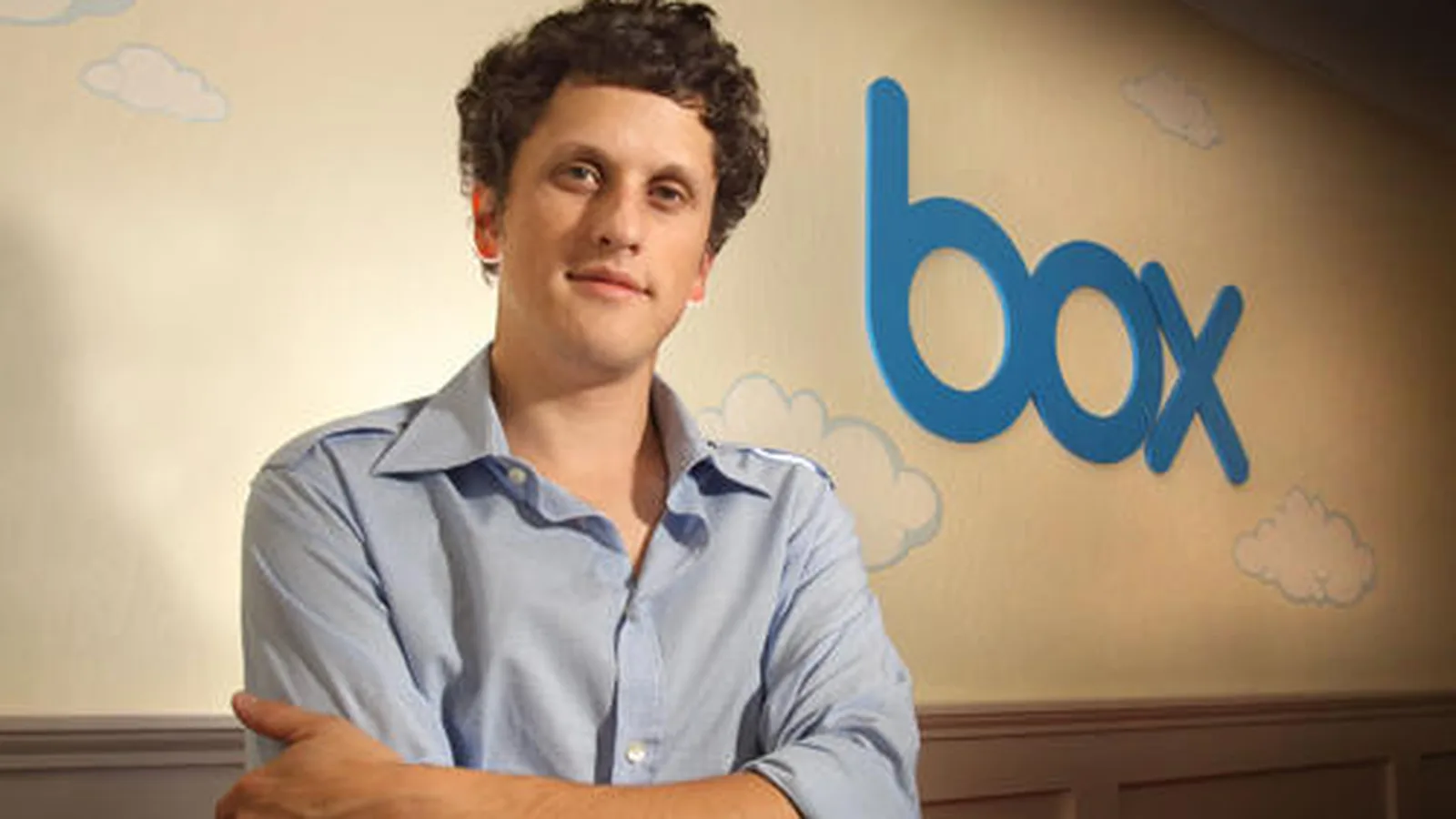
Who: Aaron Levie, a student at USC in 2005. Box is worth about $4.6 billion today.
What he did: He emailed dozens of investors with the same pitch: storage was getting cheaper, internet speeds were rising, and someone should make secure online storage simple enough to work from anywhere. "If there was any theoretical chance that you could invest in the company, I was probably emailing you." Cuban keeps a public email address and reads it.
What happened: Cuban replied within a few hours and agreed to invest $350,000 before meeting the founders in person.
The lesson: Send the same clear pitch to many people. One of them reads their inbox. Source: CNBC via NBC Los Angeles, 19 May 2025
12. Synthesia: a reply in 5 minutes, $1 million by 4 a.m.
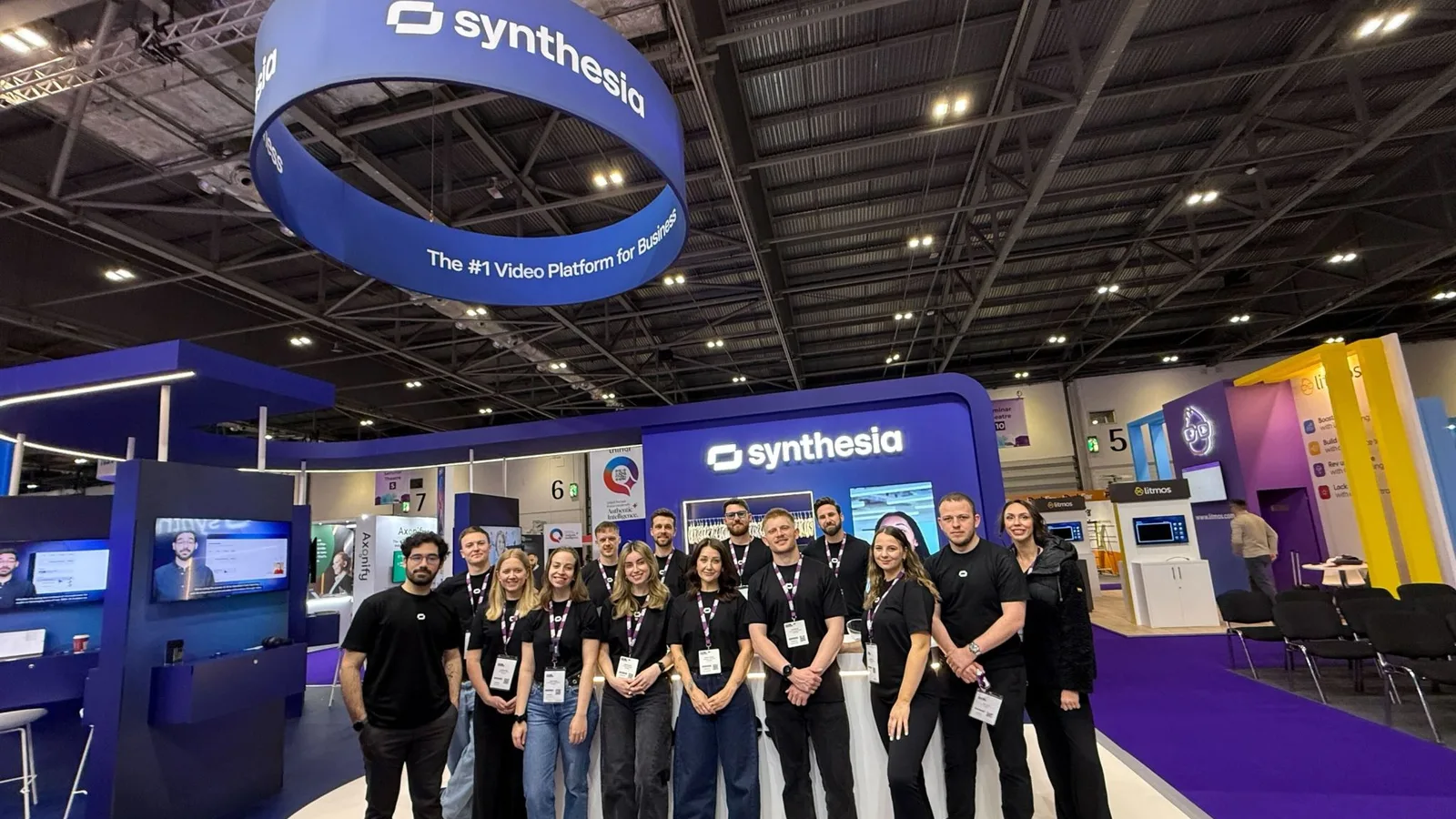
Who: One of Synthesia's co-founders, in 2017, when the company was struggling to raise its first round. Synthesia is now valued at $4 billion.
What happened: A cold email to Mark Cuban. "He responded back in 5 minutes, and they proceeded to have a 14-hour exchange over email. Around 4 a.m. U.K. time, he agreed to invest a million dollars."
The lesson: Pick the one investor whose interests match yours. Cuban sat "at the corner of media and technology", exactly where Synthesia was building. Source: SaaStr
13. Harvey: a first-year lawyer emails Sam Altman
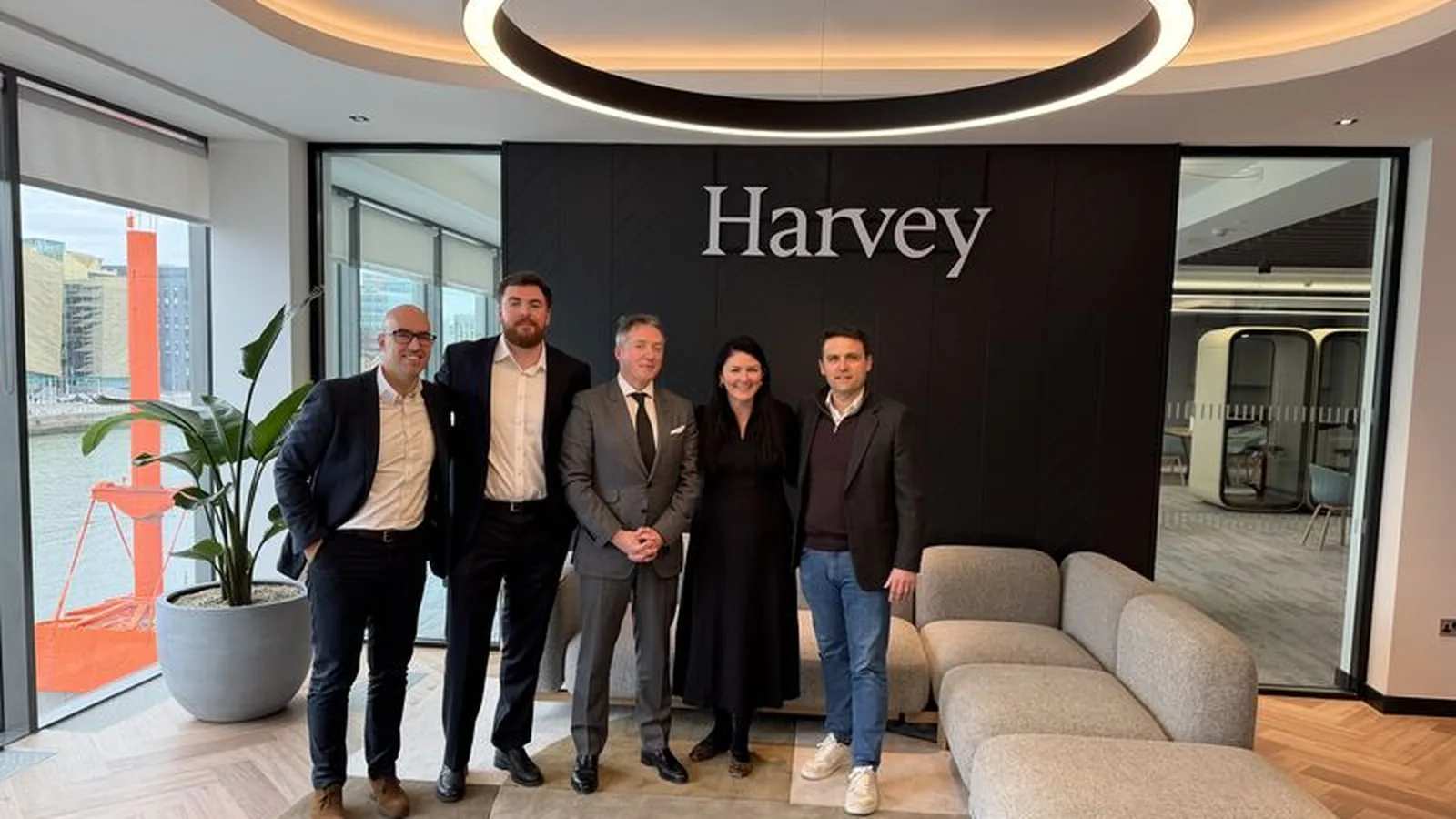
Who: Winston Weinberg, a junior associate at a law firm, and Gabe Pereyra. Harvey is now valued at $8 billion and passed $100 million in yearly revenue in August 2025.
What they did: "We cold-emailed Sam Altman and Jason Kwon, who was the general counsel at OpenAI." They chose Kwon on purpose: only a lawyer could judge whether the AI's legal answers were right.
What happened: A call at 10 a.m. on 4 July with Altman, Kwon and "kind of the rest of the C-suite at OpenAI". The OpenAI Startup Fund became Harvey's first institutional investor, and OpenAI introduced them to their angel investors.
The lesson: Email the person who can test your claim, not just the famous name. Source: TechCrunch, 14 November 2025
14. Talkdesk: an email with the numbers in it
Who: The founders of Talkdesk, call centre software, when they were at about $1 million a year. Investor Jason Lemkin lists Talkdesk at $10 billion.
What they did: Cold emailed Lemkin with "the metrics, the case studies, the sense of the go-to-market strategy, and more."
What happened: Lemkin: "It is really strong. Lesson: anyone would want to take this meeting." He invested.
The lesson: When you have numbers, lead with them. Source: SaaStr, 21 January 2021
15. Pipedrive: half of one investor's deals started with a cold email
Who: The founders of Pipedrive, sales software for small businesses, which later sold for $1.5 billion.
What happened: They cold emailed Jason Lemkin, who invested. Lemkin says he has "funded maybe ~50% of my investments" from cold emails, and lists Pipedrive, Talkdesk, Salesloft, Logikcull, Owner and Mangomint among them.
The lesson: Investors read cold emails more than founders think. Source: SaaStr, 23 August 2022
What the 15 stories have in common
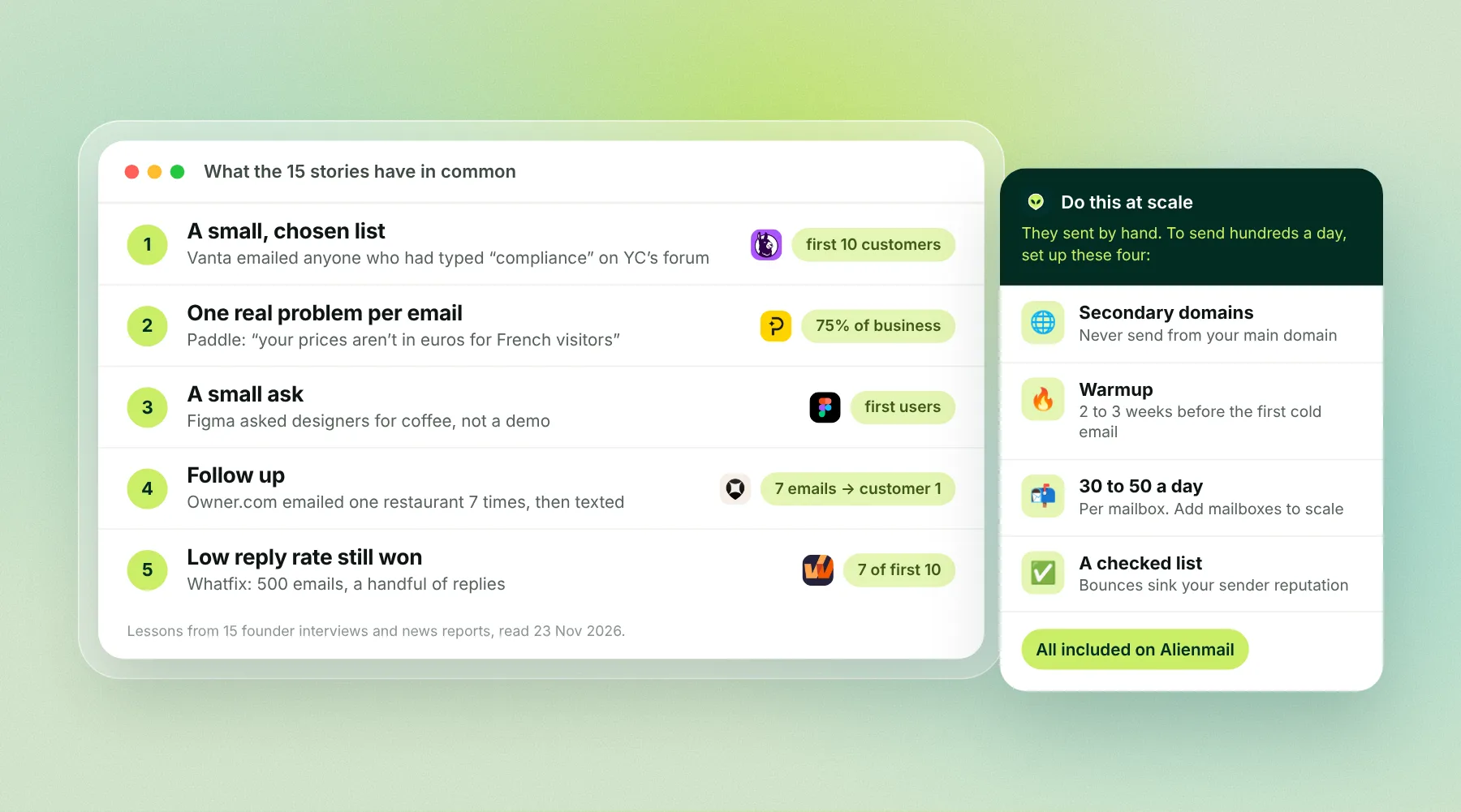
A small, chosen list beat a big one. Vanta emailed people who had typed "compliance". Zapier emailed one person with one open question. Retool emailed companies that had just raised. Nobody bought a list of 50,000 addresses.
The email named something real. Paddle pointed at prices not shown in euros. Talkdesk sent its numbers. Harvey wrote to the one lawyer who could judge the product.
The ask was small. Figma asked for coffee. Zapier asked a question. Thumbtack offered free job leads.
They followed up. Owner.com emailed one restaurant seven times, then texted. Whatfix kept sending 20 to 25 a day for three months with almost no replies.
Low reply rates still won. Under 1% at Owner.com. A handful from 500 at Whatfix. One reply was enough to start, every time.
Most of these emails were sent one at a time from a personal inbox, so deliverability never came up. To do the same at hundreds a day, set up four things first: secondary domains, a warmup period for every mailbox, 30 to 50 emails a day per mailbox, and a checked list so bounces don't sink your sender reputation.
What it costs to copy them today
Most of these founders sent email by hand. That is the other thing cold email has over every other channel: once it works at 30 emails a day, you scale it by adding mailboxes, not by buying ads or waiting months for search traffic. To do that, you need a few mailboxes on their own domains and a tool that sends, follows up and tracks replies.
Line | What it costs on Alienmail |
|---|---|
6 mailboxes on 2 domains, with DNS and warmup set up for you | $19.50 a month ($3.25 each), see mailboxes |
5,000 emails (about 180 a day on working days, 30 per mailbox) | $10, no monthly fee |
Warmup, follow-ups, reply tracking, AI that writes the sequence from your website | Included |
Total for a month | About $30 |
That is the setup behind every story above, minus the hand-typing. Start with 100 free credits, then pay only for what you send. Start free with 100 credits, no card needed.
Frequently asked questions
Does cold email still work in 2026? Yes. Eve reported 40% of cold outreach turning into demo requests in 2025, Owner.com reached a $1 billion valuation in 2025 on a business that began with cold emails, and Harvey's first investor came from a cold email to OpenAI. What has changed is the setup: Google and Microsoft now require SPF, DKIM and DMARC, and sending too much from one mailbox gets it flagged.
What is a good cold email reply rate? Most of these founders got well under 5% at the start. Owner.com got under 1%. A 20% rate is rare and usually means a tiny, hand-picked list. Judge a campaign on meetings booked, not replies.
How many cold emails does it take to get a customer? It varies a lot. Whatfix needed about 500 for 4 to 5 commitments. Zapier needed one, to exactly the right person. For a normal campaign, plan on a few hundred emails per meeting and improve from there.
Did these companies really grow because of cold email? Cold email got them their first users, customers or investors. Product, timing and a lot of other work did the rest. None of the sources say cold email alone made them worth billions, and neither do we.
Can I cold email investors? Yes. Box, Synthesia, Harvey, Talkdesk and Pipedrive all did. Investor Jason Lemkin says about half of his investments started with a cold email from the founder. Send numbers, a clear pitch and a specific reason you chose that investor.
Should I send cold emails by hand or with a tool? By hand for the first 20 to 50, so you learn what gets replies. After that, a tool that spreads sending across several mailboxes, warms them up and follows up for you.
Key terms
Cold email: an email to someone who has never heard from you.
Reply rate: replies divided by emails sent. Under 5% is normal for a new campaign.
Demo request: when someone asks to see the product. Eve measured its 40% on these.
Follow-up: the second, third and later emails to the same person. Owner.com's first customer came after seven.
Secondary domain: a domain you buy just for cold email, so your main one stays safe.
Warmup: two to three weeks of slow, friendly sending so a new mailbox builds a good reputation.